I’m new to HSE
Begin with a practical way to notice the systems already shaping your life and work.
Start where you are Human Systems Ecology
An emerging transdisciplinary field
Human beings are shaped by the places we inhabit, the people we belong to, the cultures we inherit, the institutions we create and the living systems that sustain us.
Human Systems Ecology examines how health, behaviour, identity and resilience emerge through the dynamic interaction of biological, ecological, cultural and complex adaptive systems.
A different place to begin
Modern approaches to human wellbeing often locate both the problem and the solution inside the individual.
More resilience.
More therapy.
More optimisation.
More productivity.
These things can matter. But they cannot, by themselves, repair a loss of belonging, an extractive institution, a fragmented community, a damaged place or a culture that asks people to live against their own needs.
What if many of the difficulties we experience are intelligible responses to systems that no longer support the ways human beings need to live?
Human Systems Ecology
The discipline in one sentence
Human Systems Ecology is a transdisciplinary field that examines how human health, behaviour, identity and resilience emerge from the dynamic interaction between biological systems, ecological environments, cultural frameworks and complex adaptive systems.
It understands human beings as deeply embodied, ecological, cultural and systemic. Distress is not reduced to an isolated individual problem; it can also signal mismatch or breakdown within and between the systems that shape a life.
Choose your way in
Begin with a practical way to notice the systems already shaping your life and work.
Start where you areReceive considered Field Notes as the ideas, evidence and applications develop.
Receive Field NotesExplore whether HSE can offer a wider frame for an organisation, community or event.
Bring HSE into practiceThe disciplinary architecture
Four interdependent domains
Each domain is a legitimate focus of inquiry in its own right. None can be understood fully in isolation from the others.
Body, metabolism, circadian biology, neurology, endocrine and immune function.
Land, climate, light, seasonality, biodiversity and the environments we inhabit.
Story, mythology, identity, ritual, shared meaning, memory and belonging.
Communities, institutions, economies, technologies, feedback and resilience.
The relational lens
A human is never only an individual
The four domains become lived experience through overlapping relationships—with body, others, community, culture, institutions, place and the wider living world.
 HUMANwithin relationship
The sensing, adaptive organism.
Attachment, reciprocity, care and mutual recognition.
Belonging, participation and shared life.
Meaning, memory, story, norms and inheritance.
Systems that organise power, attention and possibility.
The lands, waters, climates and histories we inhabit.
The ecological relationships on which human life depends.
The work in the field
Questions worth staying with
Human Systems Ecology develops through writing, research, observation and work with people in real settings.
What makes somewhere—and someone—feel part of us?
How do shared stories sustain, constrain or divide human life?
What kinds of people do our organisations make possible?
How do designed environments reorganise relationship and presence?
What changes when health and adaptation are understood in context?
What do humans owe the living systems that make life possible?
Field Notes
Writing from an unfinished inquiry
Essays, observations, research notes and conversations about the conditions shaping human life.
Belonging & place · 8 min
Belonging is often described as a feeling held by an individual. What becomes visible when we understand it instead as a relationship between person, memory, community and place?
Read Field NotesForthcoming books
The public doorway and the deeper architecture
The first book · In development
What if the greatest danger of artificial intelligence is not that machines become more like us, but that we become more like machines? Remaining Human explores the conditions through which judgement, competence, belonging, meaning and moral agency actually emerge.
Join the early-reader list for extracts, research notes and invitations to read advance material as the book develops.
The foundational work · Forthcoming
The deeper philosophical, scientific and applied architecture.
A foundational account of how human health, behaviour, identity and resilience emerge through biological, ecological, cultural and complex adaptive systems.
Follow the development of HSEPublished audiobook · 2021
Written and narrated by Mark Mathieson, this Audible Original presents nine lessons for reconnecting with the hidden, wild systems around us and developing sustainable performance.
Audiobook · 2 hrs 53 mins · Audible Originals
Listen on AudibleListen
Featured conversation · 10 August 2026
Hear Mark join Hugh, Ryan and Josh to explore how nature regulates the body, why identity is shaped in relationship, and what people and place can reveal about being fully human.
About Mark Mathieson · Psychologist and HSE founder
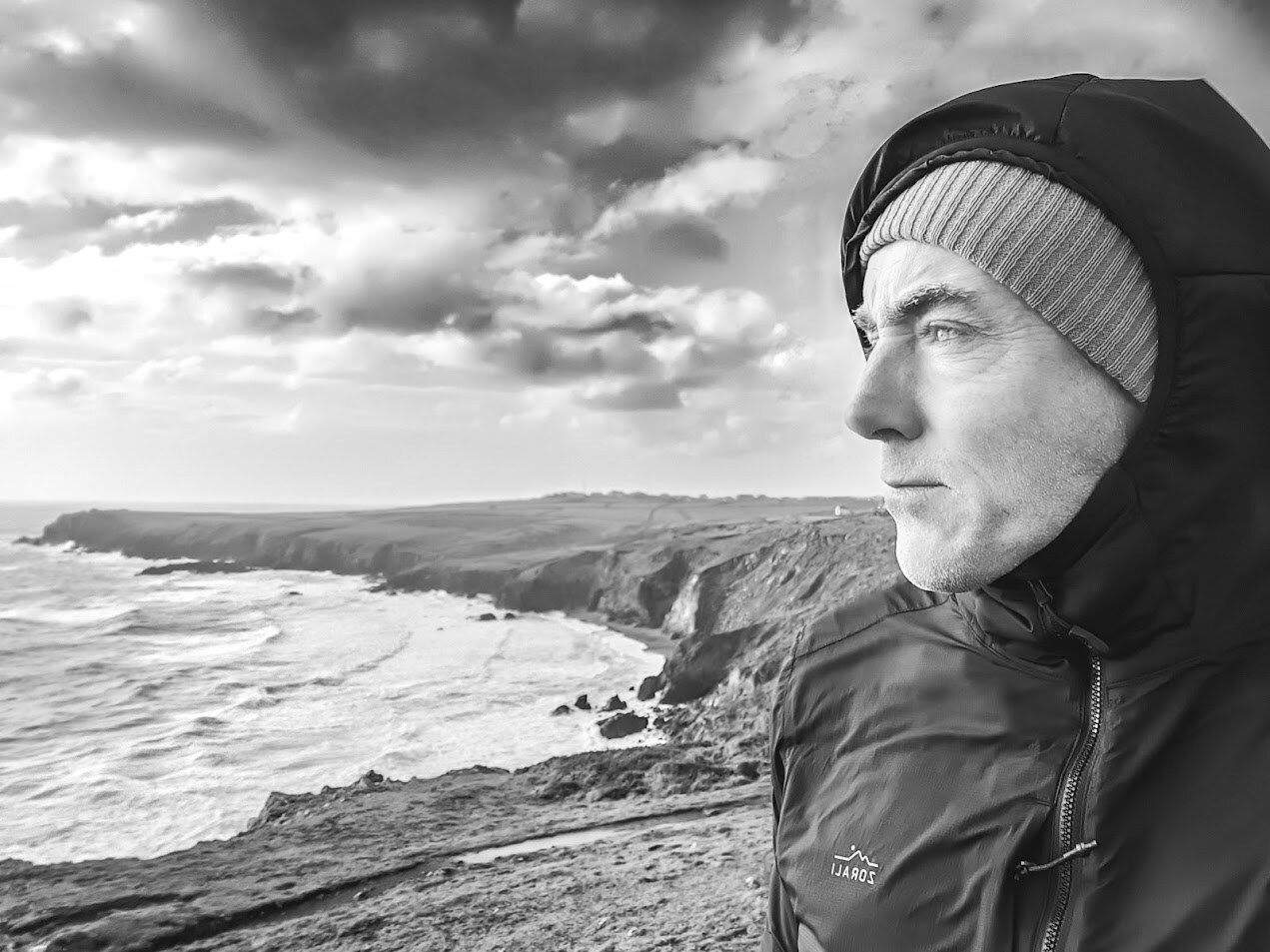

Human Systems Ecology grew from more than twenty-five years working across psychology, mental health, organisations, sport, the military and demanding environments.
Across those settings, Mark kept encountering the same limitation: human difficulties were treated as individual problems even when the conditions producing them were relational, cultural, institutional and ecological.
Bring the perspective into practiceWork with Mark
Bring Human Systems Ecology into practice
Mark works with organisations, communities, researchers and event audiences where questions of health, belonging, culture, place and systemic change need a wider frame.
Keynotes, leadership forums and facilitated conversations that make the HSE perspective vivid, rigorous and usable.
Register interestStrategic framing for organisations and communities navigating culture, wellbeing, resilience and complex change.
Discuss an engagementCurriculum, practitioner learning, research collaboration and partnerships that help establish the emerging discipline.
Explore a partnershipSend two or three lines about the setting, the question and who it affects. Mark will tell you plainly whether HSE is likely to be a useful frame.
Field Notes on Human Systems Ecology
Receive new Field Notes about people, place, culture and the systems shaping human life. Subscribers will also receive the introductory Human Systems Ecology paper when it is released.